Barron’s Article: How Growing up on a Farm Lead to Wealth Management Success
January 13, 2026

January 13, 2026
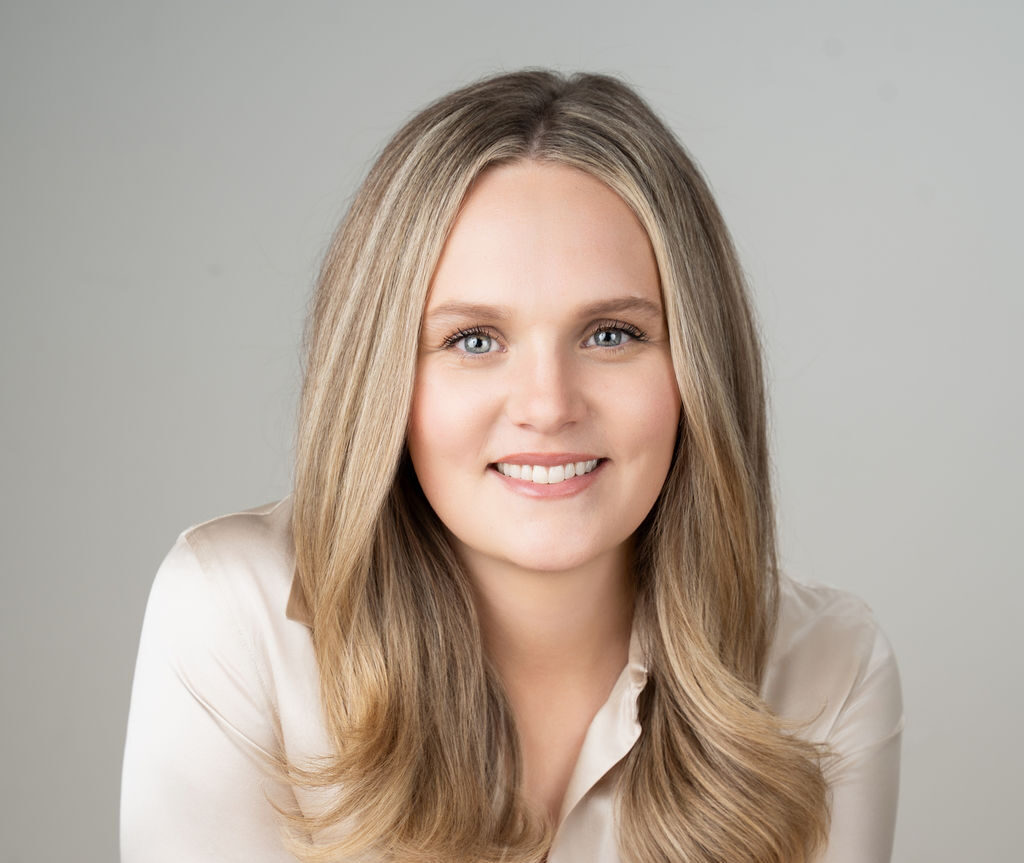
Kristin Larson's interview with Steve Garmhausen was published in a Barron's - Next Generation Advisors article. You can read it here or below.
How did Kristin Larson gain the confidence of her mentor’s long-established clients while she was still in her 20s? A childhood participating in the family farming business had something to do with it, she says.
“Growing up on a farm,” says Larson, the founder of NewSpring Wealth Partners, in Minneapolis, “you learn a lot of skills you wouldn’t think would necessarily apply to wealth management, stuff like teamwork, showing up on time, doing what you say you’ll do, and doing it right.”
The fact that those skills do apply to wealth management helps to explain why Larson inherited her retiring partner’s book and launched her $170-million independent firm earlier this year under Sanctuary Wealth’s independent network.
Now 34, Larson tells Barron’s Advisor how she’s built her career, why the skills that got her to this point aren’t enough to move her to the next level, and how aspiring wealth management professionals can lay the groundwork for success even before they land their first job.
How did you become aware of a wealth management career? I definitely didn’t know what a financial advisor was, and went down the road of personal finance somewhat out of necessity. I grew up on a dairy farm in rural Wisconsin. In some ways it was a wonderful place to grow up, but I also had a front-row seat to a lot of financial stressors that my parents encountered as owners of that business. And I realized that wasn’t how I wanted to live my life from a financial perspective.
Sometime around age 13 or 14 I heard about Suze Orman, and I just became obsessed with her. I read every book she had. I learned about Roth IRAs and index funds and how to get started investing. So I had all that in the back of my mind as I went off to college.
I studied accounting at the University of Minnesota, and I interned with a team at Ameriprise throughout my college days. So I got a sense of how they ran the business, and what they did, how much money they made, and how they worked with clients. I ended up with them as a full-time paraplanner after I graduated from college. I had the title of office manager, and I was doing a lot of different things for them.
From there I went to Wells Fargo Advisors as an associate, and I got started on my CFP. I was then recruited to UBS, and that’s where I would say my career really began. I was a wealth planning associate, focused on financial planning for all of the advisors across Minnesota. That’s also where I met my former business partner, Lois Carlson. She saw something in me, and was a phenomenal mentor. I eventually took over her business when she retired.
You started your independent practice in February of this year—what made it hard? I was eight months pregnant when I left UBS to launch NewSpring Wealth Partners, which is a fee-only advisory firm. If you can imagine, the breakaway process is sometimes years long. In my case, I knew I was leaving more than a year before making that change, even prior to becoming pregnant. Because of my contractual agreements with UBS, I wasn’t allowed to leave prior to Jan. 31 so it was just a question of, do I do it now before this baby comes, or do I wait until after the baby is born? And I think I made the right call. It is easier to do that with the baby inside than outside.
Was it scary to go independent? It absolutely was very scary. I knew I wanted to do it. My husband was supportive of me. And I had an amazing transition team. But I resigned from UBS at 10 a.m. and I walked out the door at like 10:02 and had zero clients. What if I’m the one whose parachute doesn’t open? But it was a short-lived period of scary. By the end of the day we knew it was going to be just fine.
Who are your clients, and what services do you offer? I focus on providing customized financial planning for my clients, many of whom are business owners. My clients are typically in the range of $2 million to $25 million in terms of net worth, because I took over an existing business. Some of them don’t fall into the business-owner category, but that’s where I’m focused in terms of bringing on new clients. I love helping businesses navigate all the complexities that ownership brings. I think I’m uniquely positioned to do this because now I’m a business owner too. I understand many of the challenges and benefits.
Everything starts with financial planning. That looks like digging into tax strategies for clients, often in coordination with their CPA or their outside tax planning folks, making sure their estate plan is in order and accomplishing what they want it to in a tax-smart way. It also involves making sure they’ve got access to adequate liquidity, that they have a portfolio built to withstand market fluctuation. What I love is fitting all the pieces together and solving problems for clients.
What was it like being in your 20s and taking over a veteran advisor’s book? It was definitely something that happened over time, not everybody trusted me from day one. I joke that at the beginning I was lucky if clients would take a phone call from me. The second year they would answer my calls and the third year they called me instead of calling Lois, my business partner. It took time to build trust.
Growing up on a farm, you learn a lot of skills you wouldn’t think would necessarily apply to wealth management, stuff like teamwork, showing up on time, doing what you say you’ll do, and doing it right. My mom always said she didn’t expect perfection, but she expected excellence. We were not treated like children oftentimes are. I had adultlike responsibilities from a very young age. So I think I always came across to clients as older than I was. And fortunately, many of them never explicitly asked my age. They were just like, oh, she seems like she can handle this.
What’s on your clients’ minds right now? If I had a word map of the biggest word on everybody’s mind over the past 12 months, “uncertainty” would be front and center. They’re concerned about social things, market things, economy things, tariffs, all of it. What I try to bring everybody back to is yes, the world is definitely uncertain right now. And you’re not alone in feeling that way. And the world has always been uncertain. I think right now it’s just so much more in our face than it has ever been, especially if you’re waking up and looking at Twitter and CNBC and all these awful news stories.
I try to bring it back to OK, what can we do with all this information? What can we control? For some of my clients, that might be making a charitable gift to an organization they feel strongly about. Maybe it’s getting involved politically. From a financial perspective, it’s making sure they’ve got plenty of liquidity to withstand market volatility. One of the biggest things I tell people is that when you’re feeling panic and that you need to do something, sometimes you just need to sit tight and wait it out.
What is your investing approach? Are you more of a passive or active manager? I fall very much on the side of using index funds. I do a fair amount of direct indexing, particularly for clients who have larger sums of money in taxable accounts, to help increase tax alpha.
How important is it to be an active manager? As far as I’ve seen most U.S. large-cap managers underperform the index, and that’s been the case for quite some time. If I see evidence to the contrary, I would certainly be open to changing my view, but I think our time is better spent in other areas. We have to perform well relative to the market, there’s no question. But if a client’s sole focus is beating the market, I am not the person for them.
What have been the keys to your success thus far? I think I’m in chapter two of my career. Chapter one was getting somebody like Lois to notice me, getting the basics in place. For that part of my career the keys were showing up early, staying late, and doing good work. Those things are all foundational now.
I think going forward will require a different set of skills. As a business owner with small kids at home, I have to be much better at building a good team of people around me and delegating. I can’t do it all alone. I’m going to have to become a much better leader.
What’s your advice to people just starting off in the industry? The biggest thing is to take initiative. Even if you don’t have a job in the industry yet, take the initiative. Pick up the phone and call some advisors. I would be so impressed if a young person called me and said, “Hey, my name is Joe. I’m looking to get started in the industry. Do you have 20 minutes for me?” I’m a very busy person, but I would make time for that, because so few people pick up the phone now. I’d be like, wow, this person might have some potential.
If you’ve got the job, do it with excellence. Don’t let things fall through the cracks. Be very detail oriented and prove you can do the basic things well. But also be somebody who can solve a problem. Go to the advisor you’re working with and say, “Hey, I noticed we don’t have a system for taking care of required minimum distributions. Here’s what I put together. What do you think?” Obviously know your lane, but if you take initiative and solve problems you’re going to move to the front of the line. That works with clients too. If you can take the initiative to solve a problem for them, that builds trust.
It’s such an amazing career, especially if you can get with a team that has a path for you to grow and take over more business. There’s a statistic that something like 33% or 37% of advisors are going to retire in the next 10 years. That is a huge opportunity. If you can just hang around and be pretty decent at what you do, there’s a future for you.
How do you relax and unwind outside of work? I have a three-and-a-half-year-old and a six-month-old at home so there’s not a lot of time for hobbies aside from having fun with the kids. I love anything home related—cooking, baking, decorating, interior design, decorating for Christmas. I’ve been planning Christmas since probably July or August. You’d be quite impressed with my Christmas to-do list. It’s a whole thing.
Thanks, Kristin.